ICNL Boosts Partners’ Work on Civic Space in Island and Developing Countries
Published September 2026
Civil society in Small Island Developing States (SIDS) and Least Developed Countries (LDCs) plays a crucial role in advancing development and good governance. An enabling environment for the exercise of civic freedoms is essential to making these contributions possible. Open civic space empowers civil society organizations (CSOs), activists, community leaders, and human rights defenders in SIDS and LDCs to promote accountability, represent community interests, provide expertise, and foster effective service delivery.
In 2026, with the support of the Department of Foreign Affairs and Trade of the Government of Ireland, ICNL has been working with partners in SIDS and LDCs to strengthen efforts to defend and expand civic space in their countries.
ICNL has been collaborating with SIDS/LDC partners to enhance their engagement on civic space issues. ICNL has convened a series of virtual workshops on multilateral engagement and domestic advocacy to defend and expand civic space. More than 200 partners from SIDS and LDCs have joined these workshops thus far, with a final set of workshops on bolstering civil society resilience set to take place later this year. ICNL has also developed guidance (see boxed text) for partners on engaging with multilateral mechanisms to promote civic space.

Resources for Partners
ICNL Guidance on Multilateral Engagement
ICNL has published briefers on strategic approaches to multilateral engagement, entry points at UN bodies, and advancing civic space through specialized and technical multilateral bodies. A final briefer in this series, exploring opportunities to engage with regional mechanisms on civic space, will be released later this year.
Advancing Civil Society’s Voice in Multilateral Spaces
ICNL is working with civil society partners from SIDS and LDCs to make their voices heard in multilateral spaces and processes. Over the course of this year, ICNL has:
- worked with the Centre of Learning and Capacity Building of Civil Society (CESC) of Mozambique, and Association Kutakesa of Angola, to coordinate a submission by over 80 CSOs from Lusophone African countries to inform the development of the UN Human Rights Council resolution on freedom of expression;
- supported CSOs from SIDS/LDC countries to provide a joint submission to the UN Human Rights Committee, proposing key edits to the Committee’s forthcoming guidance on the right to freedom of association; and
- coordinated the provision by SIDS/LDC partners of collective inputs to the UN Special Rapporteur on the human right to a healthy environment, to inform her upcoming report on the situation of environmental human rights defenders.
ICNL is also supporting civil society partners from SIDS and LDCs to participate in multilateral fora in order to promote expanded civic space. These spaces include the High-Level Political Forum on Sustainable Development (HLPF) (see boxed text) and the upcoming the 89th Ordinary Session of the African Commission on Human and Peoples’ Rights (ACHPR), as well as the 31st Conference of Parties of the UN Framework Convention on Climate Change (UNFCCC).
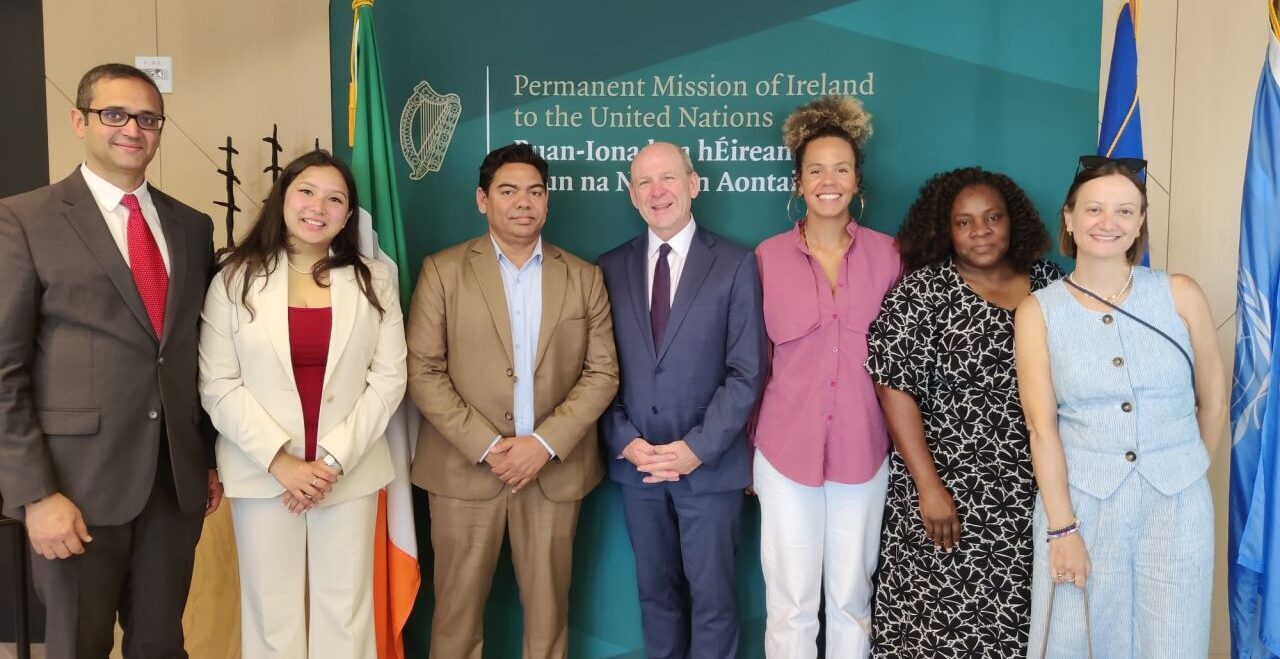
At the 2026 HLPF, ICNL co-hosted a side event with the Government of Ireland and other organizers, on Civil Society, Civic Space, and the SDGs: Coordinated Actions for the 2030 Agenda and a Sustainable Future for All. At the event, leaders from civil society and governments expressed a shared message: achieving sustainable development requires meaningful civil society participation and an enabling environment where people and organizations can contribute freely to public life.
Supporting Domestic Civil Society Initiatives
Finally, ICNL is supporting several civil society initiatives to promote expanded civic space in SIDS and LDCs. In Jamaica, the Council on Voluntary Social Services (CVSS) is mobilizing a civil society coalition to advocate for the adoption of a more enabling legal and policy framework governing non-profit organizations. In Rwanda, Conseil de Concertation des Organisations d’Appui aux Initiatives de Base (CCOAIB) is engaging with authorities to improve implementation of a recently enacted NGO law, and providing support to CSOs in navigating this new legal framework.
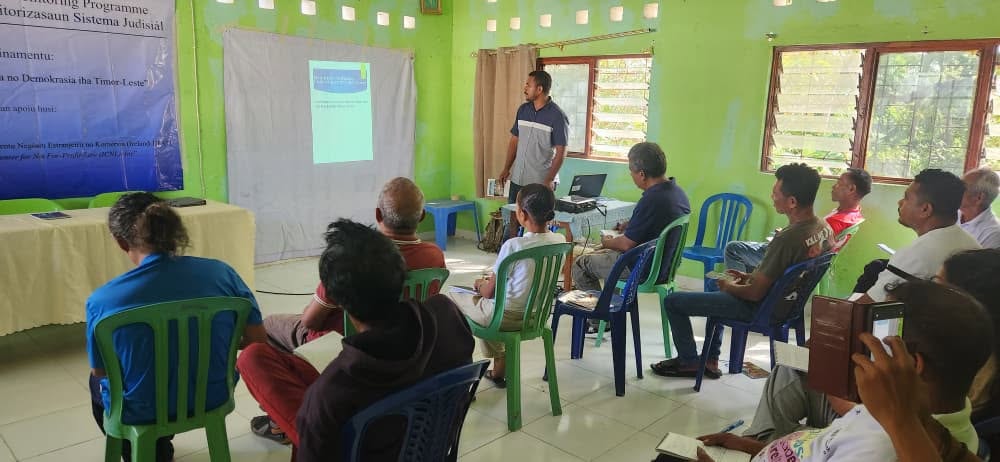
In Timor-Leste, the Judicial System Monitoring Project (JSMP) is promoting enabling reforms including adoption of a new HRD protection law and the revision of restrictive provisions in the current assembly law. These efforts have already yielded results: CCOAIB, for instance, has directly assisted nearly 40 NGOs to submit compliance applications under Rwanda’s new law, with almost 20 NGOs having already received certificates of compliance that allow them to continue operations under the new legal framework.
ICNL looks forward to continuing to support civil society in SIDS and LDCs, as well as other partners facing barriers to effective advocacy and international co-operation, to promote an enabling environment for civic freedoms in their communities and societies.
Civil society partners have welcomed the support provided through these activities as “a highly appreciated and useful initiative for strengthening the capacities of civil society organizations”. As another partner observed, in expressing appreciation for the workshops: “More like this will help civil societies to defend and expand civic space in their countries.”